
Can we decide within the planetary boundaries? The case of the Davos Forum
Posted on
2/4/2026
par Seedext
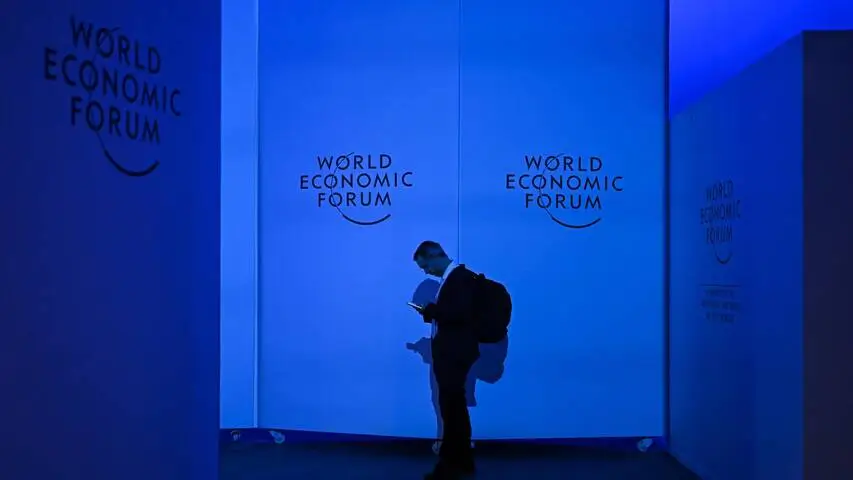
Can we decide within the limits of the planet without questioning the very foundations of the global economy? There is nothing theoretical about the question. Today, it is the subject of the most important strategic, political and economic debates. And when it comes to talking about global governance, one name almost automatically comes into play: the Davos Forum. Every year, political leaders, business leaders, financial institutions, and opinion leaders meet there to discuss the future of the world. Just that.
However, discomfort persists. The Davos Forum Now talk openly about climate, biodiversity, resilience and even planetary boundaries. The vocabulary is there, so are the concepts. But a disturbing question arises, almost unwillingly: the Davos Forum Is he really capable of deciding within the planetary boundaries, or is he content to talk about them, remotely, without assuming the operational consequences?
This article offers a thorough, structured and deliberately demanding analysis of this tension. Because behind the polite speeches of Davos Forum, hides a much larger challenge: that of decision-making in a constrained, finite, interdependent world. And deciding, in this context, is no longer a comfortable exercise.
Understanding the planetary boundaries: a framework that is now essential
Before interviewing the Davos Forum, the foundations still need to be laid. Planetary boundaries are neither a militant slogan nor an academic fad. It is a robust scientific framework, developed based on work at the Stockholm Resilience Center, which identifies nine major biophysical processes that regulate the stability of the Earth system.
These boundaries define a safe operating space for humanity. Exceeding them increases the risk of abrupt, non-linear, and potentially irreversible environmental changes. In other words: playing with fire.
Among these limitations, we find in particular:
- Climate change
- The erosion of biodiversity
- The nitrogen and phosphorus cycles
- The use of fresh water
- Ocean acidification
This framework is now widely recognized. Including, notably, by the Davos Forum himself. This is where things get interesting.
The Davos Forum and the appropriation of global boundaries
Over the past few years, the Davos Forum has incorporated planetary boundaries into its official discourse. Reports, panels, public interventions: the concept is omnipresent. On paper, it's all there.
Strategic documents from Davos Forum explicitly mention the need to “respect global borders” to ensure sustainable prosperity. We talk about transition, transformation, carbon neutrality, and responsible innovation. The lexicon is carefully chosen, calibrated, consensual.
But watch out for appearances. Because talking about planetary boundaries is not the same as deciding based on them. And that is precisely where the problem lies.
Deciding within the planetary boundaries: the real crux of the problem
Deciding within planetary boundaries involves a profound break. It is not a simple optimization at the margin. It's a change in logic.
For the Davos Forum, it would pose several uncomfortable questions:
- What economic activities need to slow down or even disappear?
- What sectors are no longer compatible with a finite world?
- What trade-offs can be accepted between short-term profitability and long-term stability?
These questions, let's be honest, remain largely avoided in the discussions of Davos Forum. Not out of ignorance, but out of political and economic prudence. Deciding is deciding. And to decide is to lose allies.
Why the Davos Forum is avoiding structural decisions
The Davos Forum is not a government. It does not legislate. It does not constrain. Its strength is based on dialogue, networking, and soft influence. Therefore, imposing a truly restrictive vision of planetary boundaries would mean weakening one's own model.
Several factors explain this restraint:
- The diversity of interests represented
- The predominance of economic actors dependent on growth
- The absence of binding decision-making mechanisms
So, the Davos Forum often prefers to promote technological solutions, incremental innovations, voluntary commitments. It's reassuring. But is that enough?
Davos Forum: talking about transformation without accepting renunciation
There is a word carefully avoided in the corridors of Davos Forum : renunciation. However, deciding within the planetary boundaries necessarily implies giving up certain trajectories.
Give up infinite material growth. Give up certain energy models. Renounce hyper-fragmented value chains. These renouncements are not popular. They don't make you dream. And above all, they do not easily fit into the dominant narratives of Davos Forum.
Economic indicators: a blind spot at the Davos Forum
Another major limitation: indicators. The Davos Forum continues to reason mainly using tools inherited from the 20th century. GDP, growth, productivity. However, these indicators are largely blind to global boundaries.
Deciding within global boundaries would require a radical rethinking of the measurement of prosperity. Again, the Davos Forum Talk about it... but without going all the way.
Davos Forum and global governance: a decision-making dead end?
The question then becomes almost philosophical: the Davos Forum is it structurally capable of making decisions compatible with planetary boundaries? Or is it condemned to remain a space for dialogue without real power of transformation?
The problem is not ill will. It is systemic. The Davos Forum reflects the world as it is, not as it should be to stay within the planetary boundaries.
Deciding differently: what the case of the Davos Forum tells us
The Davos Forum acts as a magnifying mirror. It reveals a wider difficulty: that of deciding collectively in a constrained world.
What the shows Davos Forum, it's that:
- Scientific data is not enough
- Consensus discourses have their limits
- Decision requires tools for synthesis, prioritization and arbitration
The role of decision support tools in the face of global limits
Deciding within the limits of the planet is not only a matter of political will. It is also a question of tools. Too much information, too many weak signals, too much uncertainty.
The Davos Forum illustrates this cognitive overload perfectly. Multiple panels, voluminous reports, contradictory experts. In the end, who decides? And on what basis?
Conclusion
So can we decide within the planetary boundaries? The case of Davos Forum shows that the answer is far from obvious. The scientific framework is there. The speeches too. But the decision, the real one, the one that involves clear trade-offs and assumed renunciations, remains largely out of reach.
The Davos Forum is neither the ideal culprit nor the predicted savior. It is a symptom of a world that knows, but that does not yet dare to decide fully within the planetary boundaries. And as long as this contradiction is not confronted head-on, global borders will remain a discussed concept... more than a framework that is actually applied.